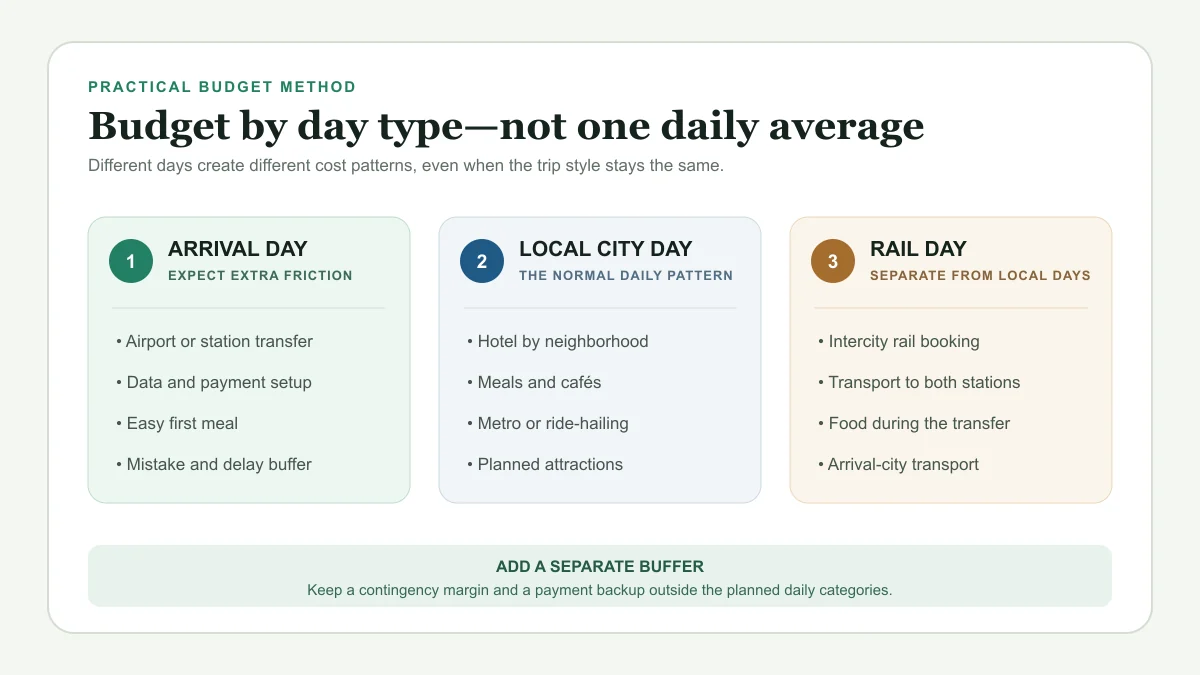
For a first China trip, plan your budget by day type, not by one average daily number. A Beijing or Shanghai arrival day, a high-speed rail travel day, and a quiet local day have very different costs.
Most budget guides make China sound either extremely cheap or surprisingly expensive. Both can be true. A simple noodle meal may be inexpensive, but a rushed airport taxi, a last-minute train ticket, a hotel in a central district, or a failed payment setup can change the day fast. Your goal is not to guess the perfect number. It is to avoid being underprepared in the places where money friction creates stress.

A practical daily budget range
Use these as planning ranges, not promises. Prices change by city, season, exchange rate, hotel location, and how far you book in advance. The point is to give yourself a working structure before you start building the itinerary.
| Travel style | Typical daily pattern | What can push it up |
|---|---|---|
| Lean | Simple hotel or hostel, local food, metro, limited paid attractions | Central hotel areas, airport transfers, high-speed rail days, popular holidays |
| Comfortable | Private room, a mix of local meals and cafes, metro plus ride-hailing, major sights | Better hotel location, premium train seats, guided experiences, shopping |
| High-comfort | Central hotels, taxis or ride-hailing, flexible meals, faster routes, less friction | Luxury hotels, business-class rail, private guides, last-minute bookings |
The five costs first-time visitors forget
The visible costs are flights and hotels. The hidden planning costs are the ones that affect your first day and your ability to move between cities.
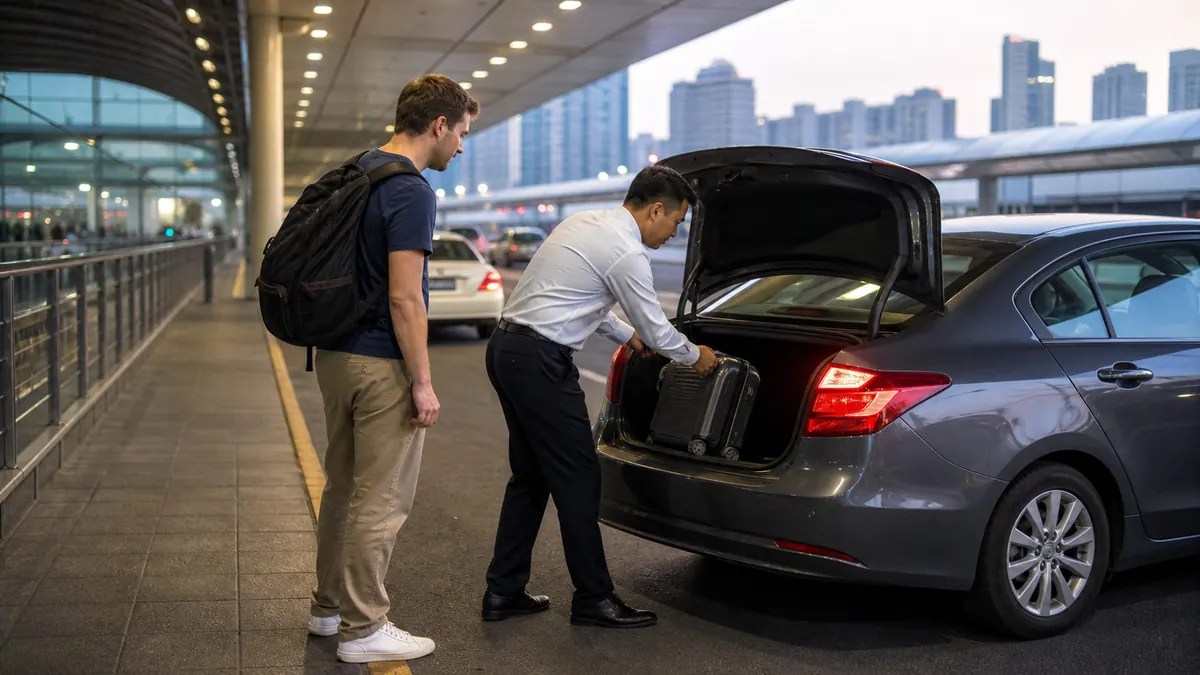
If you land tired and do not know the route, you may choose the easiest option rather than the cheapest one. That is fine, but budget for it.
High-speed rail can be excellent value, but it is not the same as a local metro fare. Add city-to-city travel days separately.
Roaming, eSIM, and local SIM choices change both price and reliability. Cheap data is not useful if it fails when you need payment or maps.
Some major sights require advance booking or identity details. The cost is not only the ticket; it is also the planning time.
If one wallet, card, or verification step fails, you need a backup. A small cash buffer can turn a bad moment into a manageable one.
Sample budget table for a 10-day first trip
A better budget separates normal days from transfer days. This prevents the classic mistake: calculating a cheap daily number, then being surprised when rail, airport transport, and first-day setup all land in the same week.
| Category | How to plan it | Common beginner mistake |
|---|---|---|
| Hotel | Price by city and neighborhood, not country average | Booking far from stations to save money, then losing time and taxi costs |
| Food | Local meals can be low-cost; western cafes and hotel breakfasts add up | Assuming every meal will be cheap and convenient |
| Transport | Separate metro days, airport days, and high-speed rail days | Treating intercity rail like a small daily expense |
| Connectivity | Choose for reliability first, price second | Buying the cheapest plan without a backup |
| Buffer | Add a small emergency margin for day one and city transfers | Using the entire budget for planned items only |
Payment costs are not just transaction fees
Before you travel, read the payment setup guide and decide how you will pay for small daily items. Mobile payment is common in China, but visitors should still prepare a backup card and a small cash reserve. The real cost of poor payment preparation is not a fee. It is losing time when you are trying to buy food, reach your hotel, or solve a transport problem.
Turn the budget into a preparation list
If you are still early, start with a simple checklist before building a detailed budget. Once your route is clearer, you can turn the checklist into a real cost plan for hotels, rail days, local transport, and app setup.
Get the China Arrival Checklist
Use the free checklist to catch payment, internet, document, and first-day gaps before you commit to the full route.
Get the free checklist