
Quick Answer
Most foreign travelers should prepare four payment layers for China:
- Alipay as the main mobile payment option.
- WeChat Pay as a useful backup, especially if you already use WeChat.
- A foreign bank card for hotels, larger businesses, and emergencies.
- A small amount of cash for backup.
The safest setup is redundancy: one main payment app, one backup app or card, and a small cash reserve.
If you are visiting China for the first time, payment is the one thing you should not leave until arrival.
China is easy to travel in once your basic setup works. The tricky part is that daily payments often happen through QR codes, mobile wallets, and local apps. A foreign bank card may work in some places, cash may still help, and hotel staff can often solve small problems, but relying on only one payment method is asking for stress.
The practical answer is simple: set up at least one mobile payment app before you fly, carry a backup card, keep some cash, and save your hotel address offline.
Why Payment Feels Different in China
In many countries, travel payment is simple: card first, cash second, mobile wallet optional.
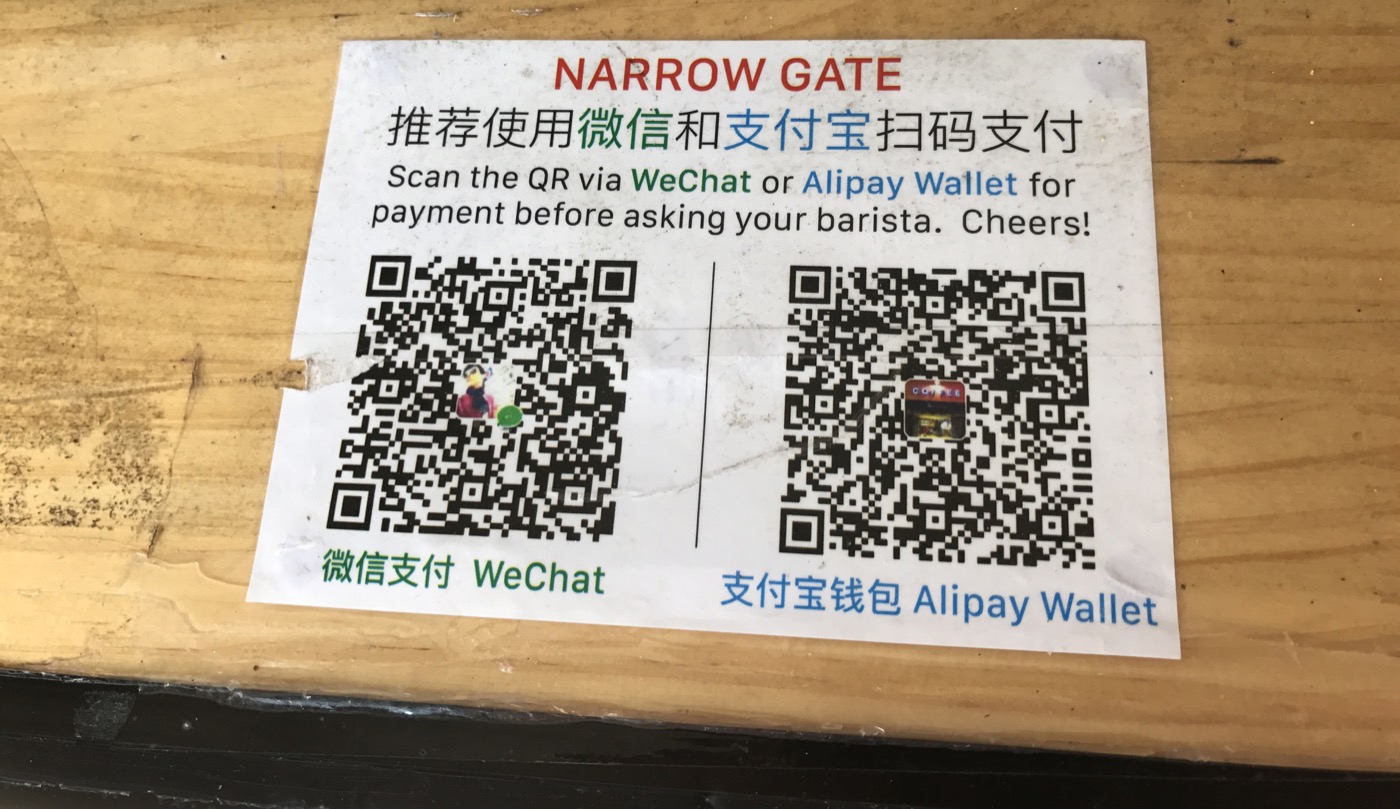
In China, mobile payment is much more central to daily life. Restaurants, convenience stores, taxis, ride-hailing, delivery, metro services, tourist attractions, and small merchants often expect QR code payment. The most common everyday payment apps are Alipay and WeChat Pay.
That does not mean visitors cannot use bank cards or cash. It means those methods may not be the smoothest option in every situation.
| Method | Best for | Main limitation |
|---|---|---|
| Alipay | Everyday travel payments, stores, transport, QR codes | Setup can vary by card, phone number, identity checks, and app version |
| WeChat Pay | Backup mobile wallet, social/app ecosystem, some merchants | Setup can be less straightforward if you do not already use WeChat |
| Foreign card | Hotels, airports, some malls, larger merchants | Not accepted everywhere, especially smaller QR-first businesses |
| Cash | Backup, small emergencies, some offline situations | Less convenient for app-based services and QR-first merchants |
Should Foreigners Use Alipay in China?
For most first-time visitors, yes. Alipay is usually the first mobile payment app to prepare.
Alipay has specific support for overseas visitors to the Chinese mainland. Its official visitor page explains that overseas users can download Alipay, choose the international version, bind an international card, and use it across travel scenarios such as shopping, taxis, public transport, flights, and hotels.
That does not mean every card will always work perfectly. Card issuer rules, verification, app versions, phone number issues, and merchant settings can still create friction. But if you only prepare one mobile payment app before your China trip, Alipay is usually the one to start with.
Use Alipay for convenience stores, restaurants, cafes, QR code payment at counters, taxi and ride-related scenarios, some public transport, and day-to-day spending after arrival.
Do not treat Alipay as your only plan. Treat it as your main plan.
Should Foreigners Set Up WeChat Pay Too?
WeChat Pay is worth preparing as a backup, especially if you already use WeChat or expect to communicate with people in China.
Tencent has expanded WeChat/Weixin Pay support for overseas users through international card networks. In practice, WeChat Pay can be helpful because many merchants, services, and people in China already use WeChat as part of daily life.
The catch is that WeChat is more than a payment app. It is also messaging, accounts, mini programs, service access, and identity-linked features. That makes it powerful, but sometimes more confusing for a first-time visitor than a simple payment-only setup.
If you already have WeChat installed and active, setting up WeChat Pay before your trip can be useful. If you are short on time, prepare Alipay first, then add WeChat Pay as your second layer.
Can You Pay in China with a Foreign Card?
Sometimes, yes. But a foreign card should not be your only payment plan.
International cards are more likely to work at larger hotels, airports, some malls, higher-end restaurants, international chains, and some travel counters.
They are less reliable at small local restaurants, street-side shops, QR-only merchants, app-based services, and small transport or local service providers.
This is the mistake many first-time visitors make: they assume that if a card works in Tokyo, Singapore, London, or New York, it will work the same way in China. Sometimes it will. Often it will not be the easiest option.
Bring at least one foreign card as backup. If possible, bring two cards from different issuers or networks. But do not land in China with only cards and no mobile payment setup.
Do You Still Need Cash in China?
Yes, but as backup, not as your main system.
Cash can still be useful if your mobile payment app fails, your phone battery dies, your internet connection is not working, a card payment is declined, or you need a small emergency fallback.
The problem is that cash is not always convenient for modern China travel. Many services are app-based. Some small merchants may be more used to QR payments. Some travel problems are easier to solve with a working phone and payment app than with cash.
Carry enough cash to protect your first day, not so much that it becomes your entire strategy.
What to Prepare Before You Fly
1. Install Alipay
Install the app, choose the appropriate international setup if shown, and add your card before departure. If your bank requires verification, it is easier to handle that at home than after landing.
Do not wait until you are tired, offline, or using airport Wi-Fi.
2. Install WeChat and Consider WeChat Pay
If you expect to use WeChat in China, install it early. If WeChat Pay setup is available and smooth for your account, set it up as a backup.
If it becomes complicated, do not panic. Your first priority is having one reliable mobile payment method plus backup card and cash.
3. Check Your Bank Card
Before leaving, check whether your card allows overseas transactions, whether your bank blocks unusual foreign payments, whether you need app-based approval, whether SMS verification will work overseas, and whether you have a second card if the first card fails.
This is boring. It is also exactly the kind of boring thing that saves your first day.
4. Prepare a Working Phone Setup
Payment is connected to your phone. So internet and battery matter.
- Decide your eSIM, roaming, or SIM plan.
- Save payment app login details securely.
- Bring a power bank.
- Save hotel and airport details offline.
- Make sure you can receive important verification messages.
If you cannot get online, even the best payment setup becomes harder to use.
5. Save Your First-Day Details Offline
Save your hotel name in English and Chinese, hotel address in Chinese, hotel phone number, booking screenshot, airport-to-hotel route, and backup cash location.
Payment problems become much easier when your first destination is already clear.
A Simple Payment Backup Plan
Use this order when something goes wrong:
- Try your main mobile wallet.
- Try your backup wallet or second linked card.
- Try your foreign card directly.
- Use cash for a small offline payment if accepted.
- Ask hotel, airport, or staffed service counter for help.
- Move to a larger merchant, hotel, or official counter if a small merchant cannot solve it.
The key is to avoid solving a payment problem in the worst possible place: tired, hungry, offline, and holding up a line.
Where Payment Problems Usually Happen
At the airport
Airports are usually easier than small local merchants because there are staffed counters, larger businesses, ATMs, and information desks. Still, do not assume everything will be smooth. Before landing, know how you will get internet, pay for transport, contact your hotel, and show your hotel address in Chinese.
At small restaurants
Small restaurants may expect QR payment. A foreign card may not be useful. Cash may or may not be convenient. This is where a working mobile payment app matters.
In taxis or ride-hailing
Ride-hailing is easier when your app, phone number, internet, and payment setup all work. If not, ask your hotel to help with the first ride or prepare a simpler route.
At train stations
Train travel often involves passport checks, booking details, station navigation, and timing pressure. Payment is only one part of the process. If you are taking high-speed rail early in your trip, prepare more carefully than you think you need to.
Common Mistakes to Avoid
Mistake 1: "I will just use my card."
A card is useful. It is not enough by itself.
Mistake 2: "I will set up payment after I land."
You can try, but you are choosing the hardest possible time to solve it.
Mistake 3: "Cash will solve everything."
Cash is backup. It is not a full replacement for mobile payment in QR-first situations.
Mistake 4: "If Alipay works, I need nothing else."
Even a good setup can fail because of internet, phone battery, card issuer, verification, or merchant rules.
Mistake 5: "I do not need Chinese addresses saved."
Payment problems are easier when your destination is clear. Save key addresses in Chinese before arrival.
The 10-Minute Pre-Trip Payment Checklist
Before your flight, check these:
- Alipay installed
- Main card linked or at least ready to link
- WeChat installed if you plan to use it
- WeChat Pay considered as backup
- Bank card enabled for overseas use
- Second card packed separately
- Small cash reserve prepared
- Phone internet plan decided
- Power bank packed
- Hotel address saved in Chinese
This is not the full China Travel Ready Kit. It is the basic version that prevents the most common first-day payment stress.
What If Mobile Payment Still Fails?
Do not treat payment failure as a disaster. Treat it as a routing problem.
If your app fails, check internet first, try a different card inside the app if available, try the backup wallet, try direct card payment at a larger business, use cash for small purchases when accepted, or ask hotel staff or an official counter for help.
Do not keep trying the same failed method in the same situation for 20 minutes. Change one variable: merchant, payment method, internet connection, or staff support.
Best Setup for Most First-Time Visitors
For most first-time China travelers, the best payment setup is:
- Alipay as your main mobile payment app.
- WeChat Pay as backup if you can set it up smoothly.
- At least one international card.
- A small cash reserve.
- A working internet plan.
- Hotel address and first-day route saved offline.
This is not over-preparation. It is normal preparation for a country where daily payment habits may be different from what you are used to.
Once your setup works, travel gets much easier.
Download the Free China Arrival Checklist
Payment is only one part of your first China trip setup. You also need internet, essential apps, hotel details, rail planning, and a first-day fallback plan.
Download the free China Arrival Checklist before you land. It gives you a simple pre-trip reminder list for payments, internet, apps, transport, documents, and the first 24 hours.
Get the checklistFAQ
Can foreigners use Alipay in China?
Yes. Alipay provides support for overseas visitors to the Chinese mainland, including international card binding. The exact setup can depend on your card, phone number, verification, and app version, so prepare before departure.
Can foreigners use WeChat Pay in China?
Yes, many overseas visitors can use WeChat/Weixin Pay with supported international cards. It is useful as a backup, especially if you already use WeChat, but it may feel more complex than setting up a simple payment-only app.
Can I just use cash in China?
Carry cash as backup, but do not rely on cash as your only method. Many daily travel situations are easier with mobile payment, especially QR-code payments and app-based services.
Will my Visa or Mastercard work in China?
It may work at larger hotels, airports, malls, and some major merchants, but it will not be accepted everywhere. A foreign card is a backup layer, not a full travel payment plan.
Which is better for tourists, Alipay or WeChat Pay?
For many first-time visitors, Alipay is the easier first app to prepare. WeChat Pay is a strong backup, especially if you already use WeChat or expect to use WeChat-based services.
What should I do if my payment app fails?
Check your internet connection, try a backup card or app, use cash if accepted, or move to a larger merchant, hotel, airport counter, or staffed service point where help is easier to get.
Sources and Further Reading
Last checked: June 11, 2026. Payment app features, supported cards, verification requirements, and travel rules can change. Always verify important details with official sources before departure.